Best Bathroom Door Guide: How to Choose the Perfect Door for Your Bathroom
A bathroom door needs to handle privacy, humidity, and space constraints all at once, which narrows the field compared to a typical interior door. This guide covers the best materials and door styles for bathrooms, plus how to choose a color that fits the room.
In This Article
Ideal Materials for Bathroom Doors
Solid Core Doors
A solid core door is filled throughout its construction, typically with a high-density composite core and a wood veneer face, rather than the hollow interior of a standard interior door. This makes solid core doors more resistant to humidity-related warping, better at sound dampening for privacy, and generally low maintenance, which are exactly the qualities a bathroom door needs. Our solid core vs. hollow core door guide compares the two constructions in detail, and Arista builds this type of door as 5-layer solid-core doors.
Engineered Stile and Rail Doors
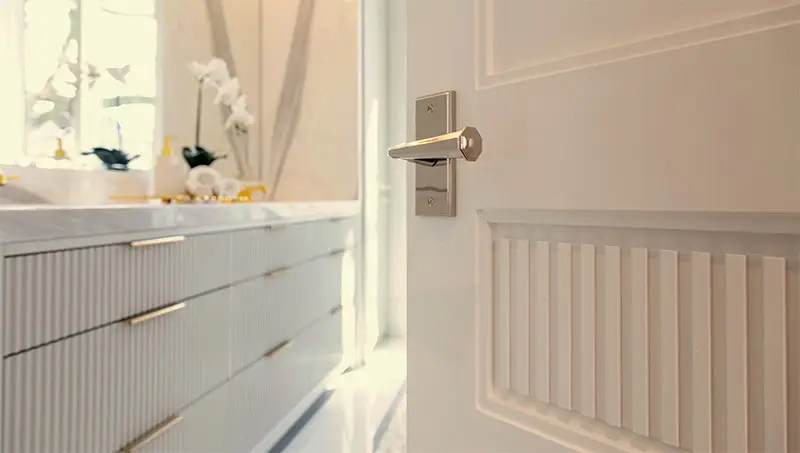
Stile and rail construction uses vertical and horizontal members to frame a set of panels, in a traditional architectural style. Arista’s stile and rail doors use an engineered core rather than solid lumber, which adds stability and helps the door hold up to the temperature and humidity swings common in bathrooms. Doors over eight feet use a laminated strand lumber (LSL) core for additional stability. These doors can be painted or stained to match your bathroom, with a range of panel and glass configurations available for privacy while still allowing light through.
Ideal Door Styles for Bathrooms
Pocket Doors
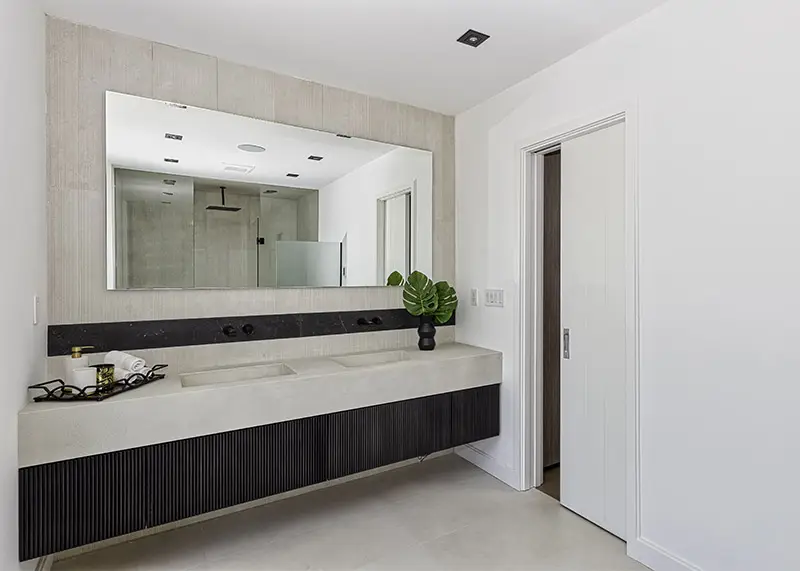
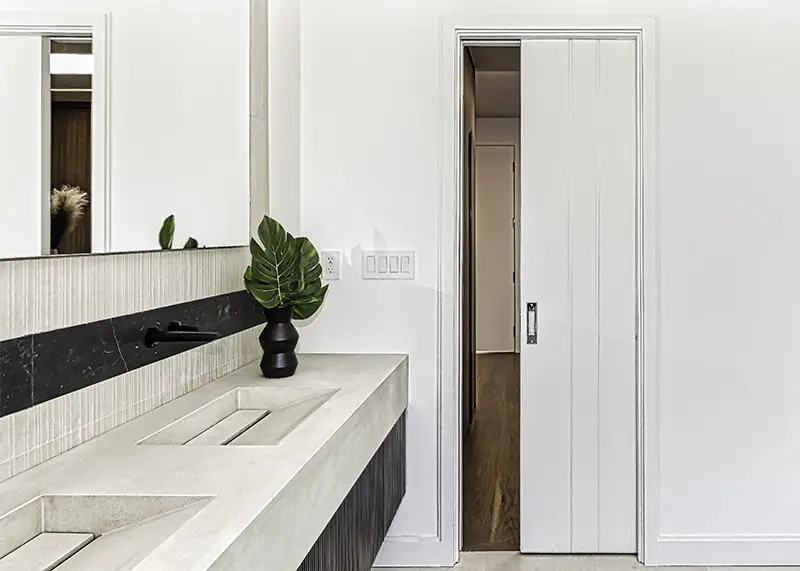
Pocket doors slide into a slot inside the wall rather than swinging into the room, which makes them a strong choice for small bathrooms where floor space is limited. A working privacy lock is essential for any pocket door used on a bathroom. Installation is more involved than a standard hinged door, since it requires opening the wall for the track, so this is best handled by an experienced installer.
Barn Doors
Barn doors slide along a track mounted outside the wall, adding a distinct design element while taking up no floor space when open. They work well in smaller bathrooms for the same space-saving reason as pocket doors, without the more involved in-wall installation. Pocket and barn doors are sized slightly differently from hinged doors; our guide to standard door sizes in Canada covers typical pocket and barn door dimensions.
Selecting the Right Color for Your Bathroom Door
Door color should work with your bathroom’s size, natural light, and overall palette. In smaller or lower-light bathrooms, lighter door colors help the space feel larger and brighter. In larger bathrooms with ample natural light, a bolder or darker color can add depth and warmth. For more on selecting a color, see our full interior door color guide.
Get a Quote for a Custom Bathroom Door
Every Arista door is built to order, including solid core and engineered stile and rail configurations sized for your bathroom opening.
Request a Free Quote
Or call us at +1 (905) 597-2120 to speak with our team directly.
Frequently Asked Questions
Is a solid core door necessary for a bathroom?
It is not strictly required, but solid core construction handles humidity and sound privacy noticeably better than a hollow core door, which is why it is the most common recommendation for bathrooms.
Are pocket doors or barn doors better for a small bathroom?
Both save floor space compared to a standard hinged door. Pocket doors disappear into the wall for a cleaner look but require more involved installation. Barn doors are simpler to install and add a visible design element, but need enough adjacent wall space to slide across.
What color works best for a small bathroom door?
Lighter colors generally help a small bathroom feel larger and brighter by reflecting more light. Bolder or darker colors tend to work better in larger bathrooms with ample natural light.