

Stile and Rail Doors — Traditional Construction, Built to Order
Stile and rail construction is the traditional method behind nearly every panel-style wood door, interior or exterior. Rather than a single flat slab, the door is built from a structural frame of vertical stiles and horizontal rails, into which one or more panels are set. Arista builds stile and rail doors entirely to order in our Toronto workshop, in engineered hardwood construction sized to your exact opening.
Proven structural methodStile and rail construction has been the standard for panel doors for centuries because it performs.
Dimensional stabilityThe frame-and-panel structure allows panels room to expand and contract independently, reducing the risk of cracking or warping.
Engineered hardwood constructionBuilt with engineered cores and real hardwood faces for long-term stability in the Canadian climate.
Fully custom configurationsPanel count, layout, glass inserts, and carved detail are all built to your specification.
Interior and exterior applicationsThe same construction method scales from interior doors to full exterior entry systems.
Made in TorontoDesigned, engineered, and built in our North York workshop, shipping across Canada and the USA.
What Is Stile and Rail Construction?
A stile and rail door is built from a structural frame rather than a single solid piece of wood. The stiles are the vertical members running the full height of the door on each side, while the rails are the horizontal members connecting them at the top, bottom, and, depending on the design, at intermediate points. Together, this frame surrounds and supports one or more panels set into grooves along its inner edge.
This is fundamentally different from a slab door, which is a single flat or veneered panel with no internal frame structure. The stile and rail method has remained the standard for traditional panel doors precisely because the frame construction manages wood movement more effectively than a solid slab of equivalent size.
Why Stile and Rail Construction Performs Better
Wood naturally expands and contracts with humidity and temperature changes. In a solid slab door, this movement has nowhere to go, which over time can lead to warping, cracking, or checking, particularly in larger doors or harsh climates. Stile and rail construction solves this structurally: the panels are set into grooves rather than fixed rigidly in place, allowing them room to move independently of the surrounding frame.
The frame itself, built from the more dimensionally stable stiles and rails, carries the structural load and maintains the door's overall shape, while the panels are free to expand and contract within their grooves without stressing the joinery. This is part of why traditional stile and rail doors have remained in continuous use for centuries, particularly in climates with significant seasonal humidity swings like Canada's.
Stile and Rail Door Configurations
| Configuration | Description |
|---|---|
| Single panel | One large panel set within the stile and rail frame, a clean, minimal look |
| Two panel | A horizontal rail divides the door into upper and lower panels |
| Multi-panel (4, 6, or more) | Traditional grid layouts with multiple smaller panels |
| Glass panel insert | One or more panels replaced with glass for light transmission |
| Carved panel | Decorative relief carving applied to one or more panels |
| Raised vs flat panel | Panels can be built with dimensional raised profiles or kept flush and flat |
Panel layout is one of the most defining style choices in a stile and rail door. Multi-panel, raised-profile configurations read as traditional, while single-panel or flat-panel layouts move toward a cleaner, more contemporary look. For doors leaning toward a minimalist aesthetic, see our guide to modern front door design.
Stile and Rail vs Slab Doors
| Feature | Stile and Rail | Slab |
|---|---|---|
| Construction | Frame with floating panels | Single flat or veneered panel |
| Wood movement management | Panels move independently within the frame | Entire slab expands and contracts as one piece |
| Visual style | Traditional to transitional, depending on panel design | Clean, minimal, modern by default |
| Customization | Panel count, layout, carving, and glass all adjustable | Primarily adjusted through finish and glass placement |
| Typical applications | Traditional entries, interior doors, period-style homes | Contemporary entries, pivot doors, minimalist design |
Carved and Decorative Stile and Rail Doors
Because the panels in a stile and rail door are discrete elements within the frame, they're a natural surface for decorative carving, from subtle linear detail to deep relief work. The frame itself can also be carved or molded for additional detail along the stiles and rails. For more on carving techniques and design styles, see our guide to carved wood doors.
A stile and rail door isn't just a style choice. It's a structural decision, built to let wood move the way wood naturally wants to move.
Engineered Construction for Long-Term Performance
Arista builds stile and rail doors using engineered wood construction, engineered cores faced with genuine hardwood, rather than solid timber stiles, rails, and panels. This combines the proven structural logic of stile and rail joinery with improved long-term dimensional stability, particularly important in Canada's wide seasonal humidity range.
Building a Traditional Panel Door?
Arista builds custom stile and rail doors for both interior and exterior applications, engineered to your exact opening and panel design.
Request a Free Quote Or call us at +1 (905) 597-2120 to speak with our team directly.Standard Door layouts


Arista Stile & Rails Profiles:
Our Shaker profile is defined by its flat-panel simplicity and unembellished edges, making it one of the most versatile choices for both modern and traditional interiors. Whether finished in paint for a sleek, minimalist look or stained to highlight natural wood tones, the Shaker profile brings balanced proportions and enduring appeal to any space.
SHAKER PROFILE (PAINT GRADE)


SHAKER PROFILE(STAIN GRADE)


The Two Step Shaker profile features subtle stepped detailing that adds depth and architectural interest while preserving the clean, geometric lines of traditional Shaker design. It’s an ideal choice for transitional spaces—bringing a refined, contemporary edge to a timeless form. Available in both paint and stain grade to suit your project’s aesthetic.
TWO STEP SHAKER PROFILE(PAINT GRADE)


TWO STEP SHAKER PROFILE (STAIN GRADE)


Our Sticking profile introduces a clean, inset bevel along the inside edge of the frame, adding a layer of craftsmanship and visual interest without overwhelming the panel design. It’s a versatile option that enhances both traditional and modern interiors—perfect for those who appreciate understated detail.
STICKING PROFILE(PAINT GRADE)


STICKING PROFILE(STAIN GRADE)


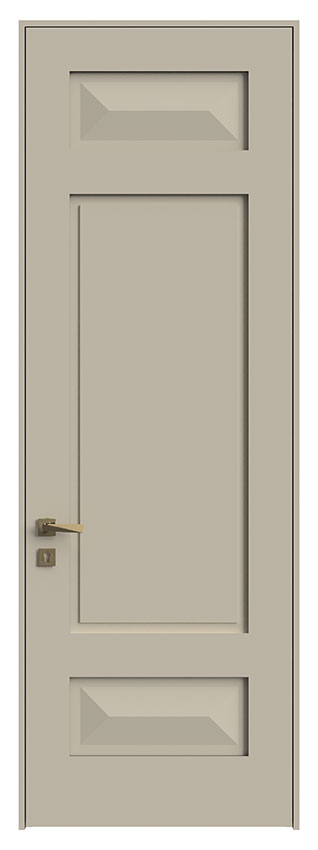
The Diamond profile features raised panels with sharply defined edges and symmetrical bevels that create a faceted, architectural look. This profile brings a sense of formality and craftsmanship—making it an excellent choice for statement doors in refined traditional or transitional interiors.
DIAMOND PROFILE (PAINT GRADE)


DIAMOND PROFILE (STAIN GRADE)


The Ovolo profile features gently rounded edges along the panel and frame, adding softness and depth to the door’s appearance. Often found in classic millwork and heritage-inspired spaces, Ovolo delivers warmth and subtle detail without overpowering the overall design.
OVOLO PROFILE (PAINT GRADE)


OVOLO PROFILE (STAIN GRADE)


Special Projects




Documents


Samples


Renders


Building a Traditional Panel Door?
Arista builds custom stile and rail doors for both interior and exterior applications, engineered to your exact opening and panel design.
Request a Free Quote Or call us at +1 (905) 597-2120 to speak with our team directly.Related Reading
- Parts of an Exterior Door: 14 Key Components Explained Understanding stiles, rails, and panel terminology in detail.
- Carved Wood Doors: A Guide to Decorative Front Door Craftsmanship Carving techniques and styles applied to stile and rail panels.
- Modern Front Door Design: A Complete Guide to Contemporary Entries How panel layout shifts a stile and rail door toward a modern look.
- Custom Exterior Wood Doors by Arista Explore our full collection of stile and rail and slab door styles.
Frequently Asked Questions
What is a stile and rail door?
A stile and rail door is built from a structural frame of vertical stiles and horizontal rails, into which one or more panels are set. This differs from a slab door, which is a single flat or veneered panel with no internal frame structure.
Are stile and rail doors better than slab doors?
Neither is universally better. Stile and rail construction manages wood movement more effectively through floating panels, and suits traditional to transitional styles, while slab doors offer a cleaner, more contemporary look. The right choice depends on the architectural style and design goals.
Can stile and rail doors include glass panels?
Yes. One or more panels in a stile and rail door can be replaced with glass inserts, a common configuration for both interior doors and exterior entries that need natural light.
Are stile and rail doors used for interior or exterior applications?
Both. Stile and rail construction is used for interior doors as well as full exterior entry systems, with the same structural principles applying at either scale.
Why does stile and rail construction resist warping better than a slab door?
The panels in a stile and rail door are set into grooves rather than fixed rigidly, allowing them to expand and contract independently of the surrounding frame. This reduces the internal stress that can lead to warping or cracking in a solid slab of equivalent size.