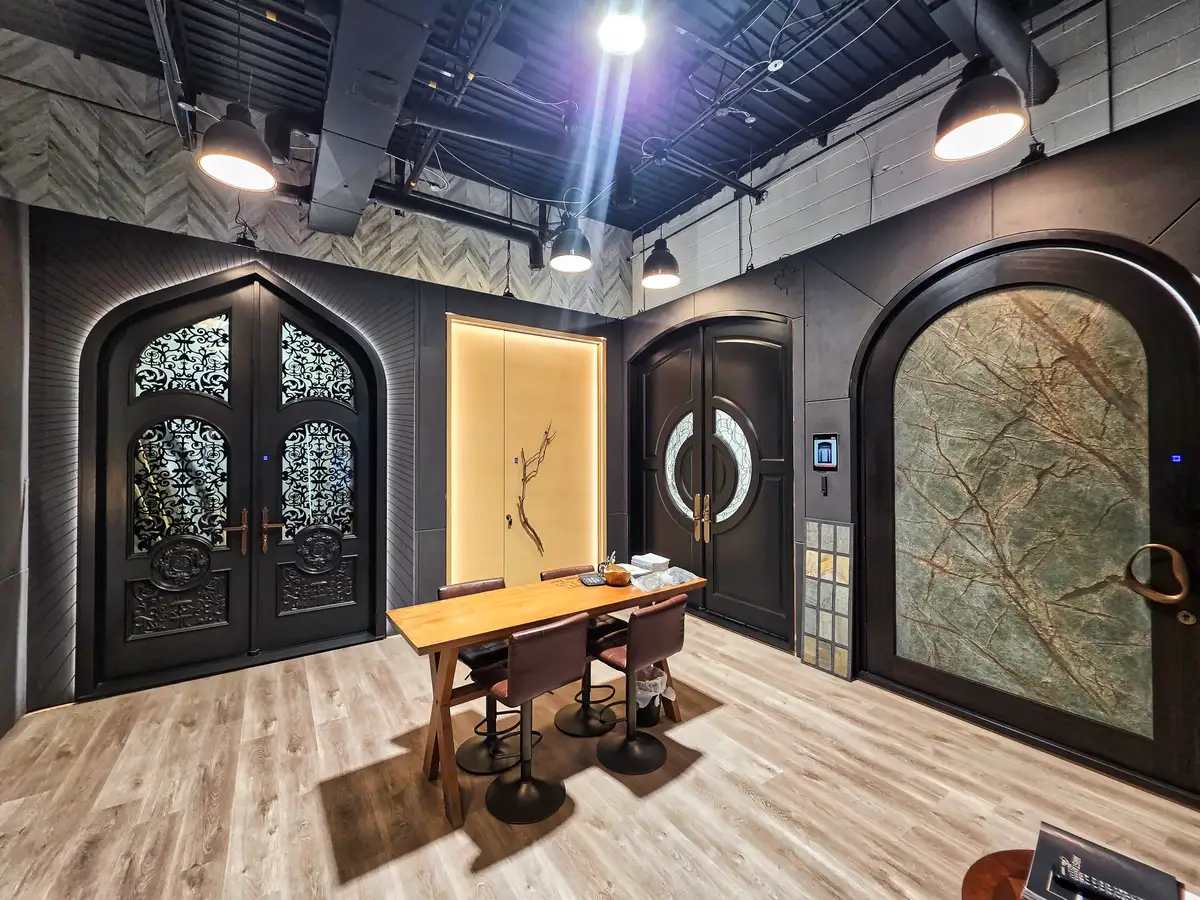
Front Door Buying Guide
Buying a new front door means weighing material, type, style, finish, and hardware together, not one factor in isolation. This guide walks through each decision so you can put together a front door that fits your home and budget.
In This Article
Front Door Material
The most common front door materials are steel, fiberglass, and wood, and each comes with different trade-offs in durability, security, cost, design flexibility, and maintenance. Wood stands apart on design: every wood door has a unique grain pattern, and engineered wood construction allows nearly unlimited flexibility in size and shape, cut to fit almost any opening rather than a fixed catalog size. It’s also been the traditional first choice for front doors for exactly that reason. Material, size, glass and hardware all shape the final quote; our guide to the factors that affect the cost of exterior wood doors explains how.
Front Door Types
Front doors generally fall into one of these categories: single doors, single doors with one sidelight, single doors with two sidelights, double doors, and double doors with two sidelights. Sidelights, the fixed glass panels flanking the door, add architectural interest and natural light, and price typically increases in roughly that order. Opening width should be the first thing you confirm when deciding which configuration fits your home.
Popular Styles
Modern Front Doors
Modern doors favor simplicity and clean lines, with sleek silhouettes and minimal detailing. Glass panels or sidelights add both natural light and visual interest. Contemporary stains, concealed hinges, and a modern multipoint locking system paired with a clean pull handle all reinforce the look. For examples, see our roundup of modern front door designs.
Traditional Front Doors
Traditional doors use stile-and-rail construction with detailing that’s hard to replicate any other way. They can be customized with clear, textured, or decorative glass and wrought iron accents, and sidelights or a transom add extra natural light without changing the door’s character.
Pivot Front Doors
Pivot doors rotate on a vertical axis rather than swinging from side hinges, which allows for taller, wider configurations than a standard hinged door supports. The result is a distinctive, elegant swinging motion and a genuinely dramatic entrance.
Craftsman Front Doors
Craftsman doors emphasize handcrafted detail and generous use of wood, often with decorative glass panels along the top quarter. Wrought iron nail heads and rustic hinges reinforce the handcrafted look, and the style remains a strong fit for cottages and bungalows; see our guide to choosing a bungalow front door.
Selecting the Finish
Finish choice should take cues from your home’s architecture, existing materials, and color palette, as covered in our guide to coordinating your front door with your home’s exterior. Paint dramatically changes the wood’s color but covers the natural grain, while stain is absorbed into the wood and preserves its grain and texture. If resale is a factor, a widely appealing color will draw more interest from potential buyers than a highly personal choice.
Deciding on Iron and Glass
Glass panels affect both privacy and light. Clear glass maximizes visibility and light, while frosted glass adds privacy while still letting in softened light. Wrought iron and gauge metal accents can add both visual interest and an extra layer of security. Our complete guide to front doors with glass panels covers glass types, sidelights and transoms in more detail.
Choosing the Right Hardware
Hardware is a small detail with an outsized effect on a door’s overall look. Lever sets remain a reliable choice in both traditional and modern architecture, while pull bars are increasingly used as a statement piece on modern doors. Rustic black or oil-rubbed bronze hardware complements a handcrafted wood door, while nickel or brass creates more contrast.
Get a Quote for Your Front Door
Whatever type, style, or wood species you’re considering, every Arista door is built to order. Visit our North York showroom or send us your project details for a free quote.
Request a Free Quote
Or call us at +1 (905) 597-2120 to speak with our team directly.
Frequently Asked Questions
What is the most popular front door configuration?
Single doors are the most common, with single doors plus one sidelight a popular step up for homeowners who want more natural light at the entry.
Should I choose paint or stain for my front door?
Paint offers more color flexibility but covers the wood grain, while stain preserves the natural grain and texture. The right choice depends on whether you want the wood’s character visible or a specific color statement.
Does hardware finish need to match my door style?
It should complement it, at least. Rustic black or oil-rubbed bronze tends to suit handcrafted wood doors, while nickel or brass reads as a more contemporary contrast.