
Custom Pivot Doors — Engineered for Scale and Design
A pivot door rotates on a concealed top and bottom pivot point rather than side hinges, allowing for larger, heavier, and more architecturally striking entries than a standard hinged door can support. Arista designs and builds custom pivot door systems for both interior and exterior applications, entirely to order in our Toronto workshop.

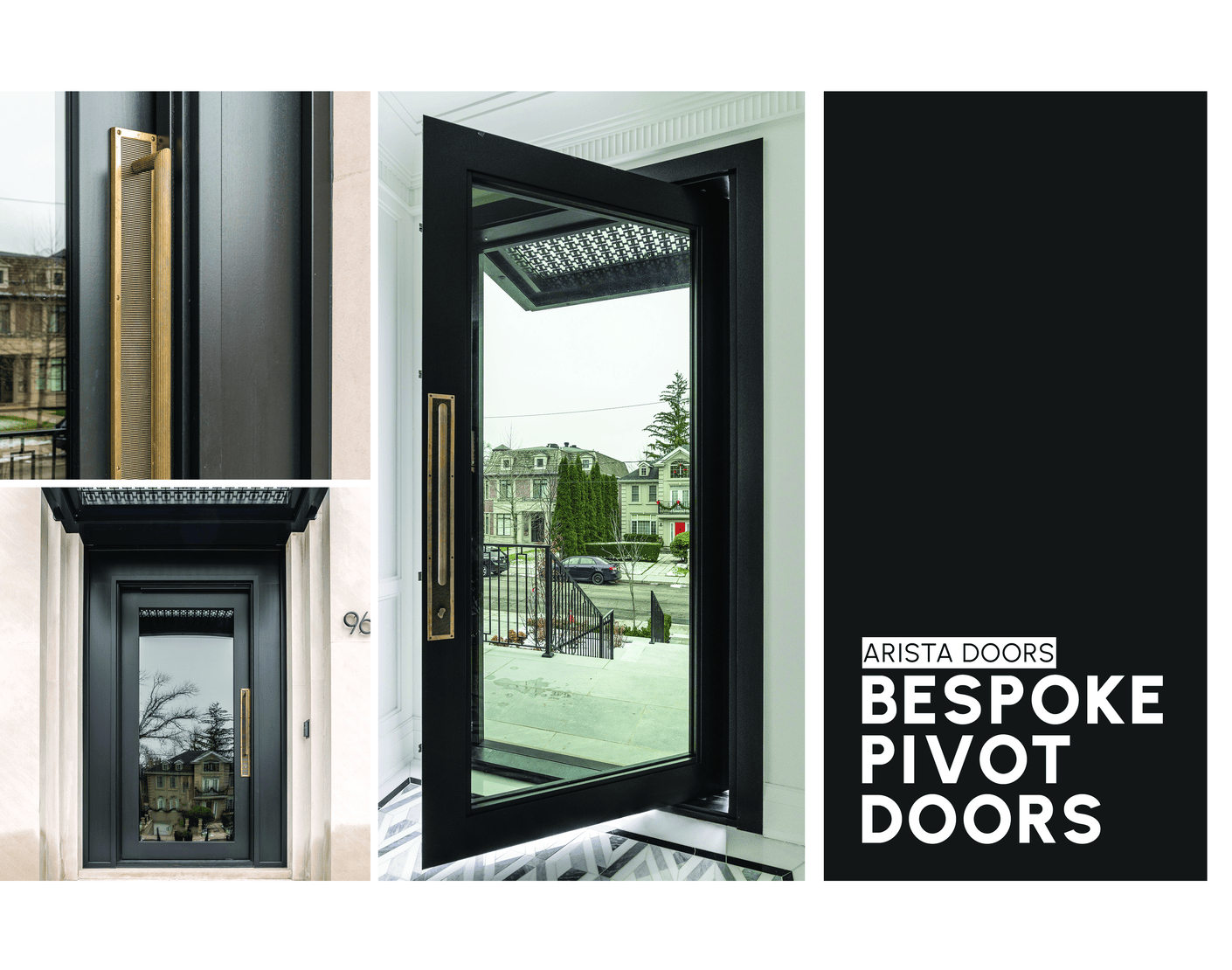
Custom engineered pivot door, exterior application
Larger formats than hinged doorsPivot doors allow significantly larger formats than conventional hinged doors, subject to engineering review, hardware selection, and structural requirements.
Concealed hardwareThe pivot mechanism is hidden top and bottom, giving the door a clean, floating appearance with no visible hinge line.
Engineered construction methodsBuilt using Engineered Stile & Rail Construction or Engineered Solid Core Construction, selected based on design, size, and performance requirements.
Built to your openingEvery Arista pivot door is manufactured to the exact dimensions of your project, not a standard size chart.
Multipoint locking on exterior doorsExterior pivot doors are engineered with multipoint locking systems for compression, weather sealing, security, and warranty coverage.
Made in TorontoDesigned, engineered, and built in our North York workshop, shipping across Canada and the USA.
How a Pivot Door Works
Unlike a hinged door, which swings from a fixed line along one edge, a pivot door rotates around a point set in from the edge of the slab, concealed within the frame and floor or threshold. This shifts how the door’s weight is supported, distributing it between the top and bottom pivot points instead of relying entirely on side-mounted hinges.
This structural difference is what allows pivot doors to scale up in size and weight beyond what a hinged door can reliably support, and it’s also what gives pivot doors their distinctive visual signature: the door appears to rotate from within itself rather than swinging open from a visible hinge edge.
For a complete technical breakdown of the mechanism, configurations, and advantages, read our full guide: What Is a Pivot Door? How It Works, 4 Types and Key Advantages.
A pivot door isn’t a hinged door built bigger. It’s a different structural system entirely, engineered differently depending on whether it’s protecting an entryway or dividing an interior space.
Interior vs Exterior Pivot Doors: Why the Distinction Matters
Pivot doors are available for both interior and exterior applications, but the engineering behind them is not the same. Exterior pivot doors have to manage weather exposure, security, and structural load in a way interior pivot doors don’t, which changes the construction, thickness, and hardware requirements for each.
| Specification | Interior Pivot Door | Exterior Pivot Door |
|---|---|---|
| Typical thickness | 1 3/4″ or greater | 2 3/4″ |
| Construction method | Engineered Stile & Rail or Engineered Solid Core Construction | Engineered Stile & Rail or Engineered Solid Core Construction, with internal steel reinforcement where size and weight require it |
| Locking hardware | Standard locking hardware, depending on project requirements | Multipoint locking system required |
| Weather performance | Not applicable | Engineered for compression, weather sealing, and security |
| Common applications | Room dividers, statement interior entries, office and residential feature doors | Main entrances, architectural facades, oversized front doors |
Because the requirements differ this much, the right specification for a pivot door depends entirely on where it’s being installed. Our team reviews the application, size, and design intent before recommending a construction method and hardware package.
Construction: Engineered Stile & Rail and Engineered Solid Core
Arista builds pivot doors using two primary construction methods: Engineered Stile & Rail Construction and Engineered Solid Core Construction. The right method is selected based on the door’s design, finish, size, application, and performance requirements, rather than a single default approach applied to every door.
Depending on the door’s size, weight, and engineering requirements, Arista pivot doors may also incorporate internal steel reinforcement to complement the engineered wood construction. This additional structural support helps maintain long-term stability and performance on larger or heavier pivot door systems, particularly oversized exterior installations.
Engineered stile and rail construction, shown during fabrication
Pivot Door Specifications
The table below reflects Arista’s standard manufacturing recommendations. Sizes beyond these figures are handled on a case-by-case basis through engineering review, not offered as a standard configuration.
| Specification | Standard Range | Notes |
|---|---|---|
| Width | Up to 48″ (most common) | Widths up to 60″ are available but require engineering review based on height, design, construction method, hardware selection, and structural requirements. |
| Height | Up to 120″ | For doors exceeding 120″, contact our team for an engineering review and construction recommendation. |
| Thickness (interior) | 1 3/4″ or greater | Depending on design and application. |
| Thickness (exterior) | 2 3/4″ | Provides the structural strength required for oversized exterior door systems and premium hardware. |
| Construction | Engineered Stile & Rail or Engineered Solid Core | Selected per project; internal steel reinforcement available for larger or heavier configurations. |
| Locking (interior) | Standard hardware | Selected based on project requirements. |
| Locking (exterior) | Multipoint system | Required for compression, weather sealing, security, and warranty coverage. |
Pivot Doors vs Swing Doors
Choosing between a pivot door and a standard swing door comes down to size, design intent, and budget. Swing doors remain the practical, cost-effective default for most openings. Pivot doors become the right choice once an opening exceeds standard hinged door dimensions, or when the door itself is meant to be a design statement rather than a functional afterthought.
Our detailed comparison covers hardware differences, size and weight capacity, cost, and where each system makes the most sense: Swing Doors vs Pivot Doors: Which Is Right for Your Home?
Are Pivot Doors Secure?
Larger openings naturally raise the question of security, and exterior pivot doors are engineered to address it directly through multipoint locking hardware. This is not optional on exterior applications — it’s required for the door to achieve proper compression, weather sealing, and warranty coverage.
Read the full breakdown of locking systems, hardware ratings, and security considerations: Are Pivot Doors Safe and Secure? 5 Key Security Advantages
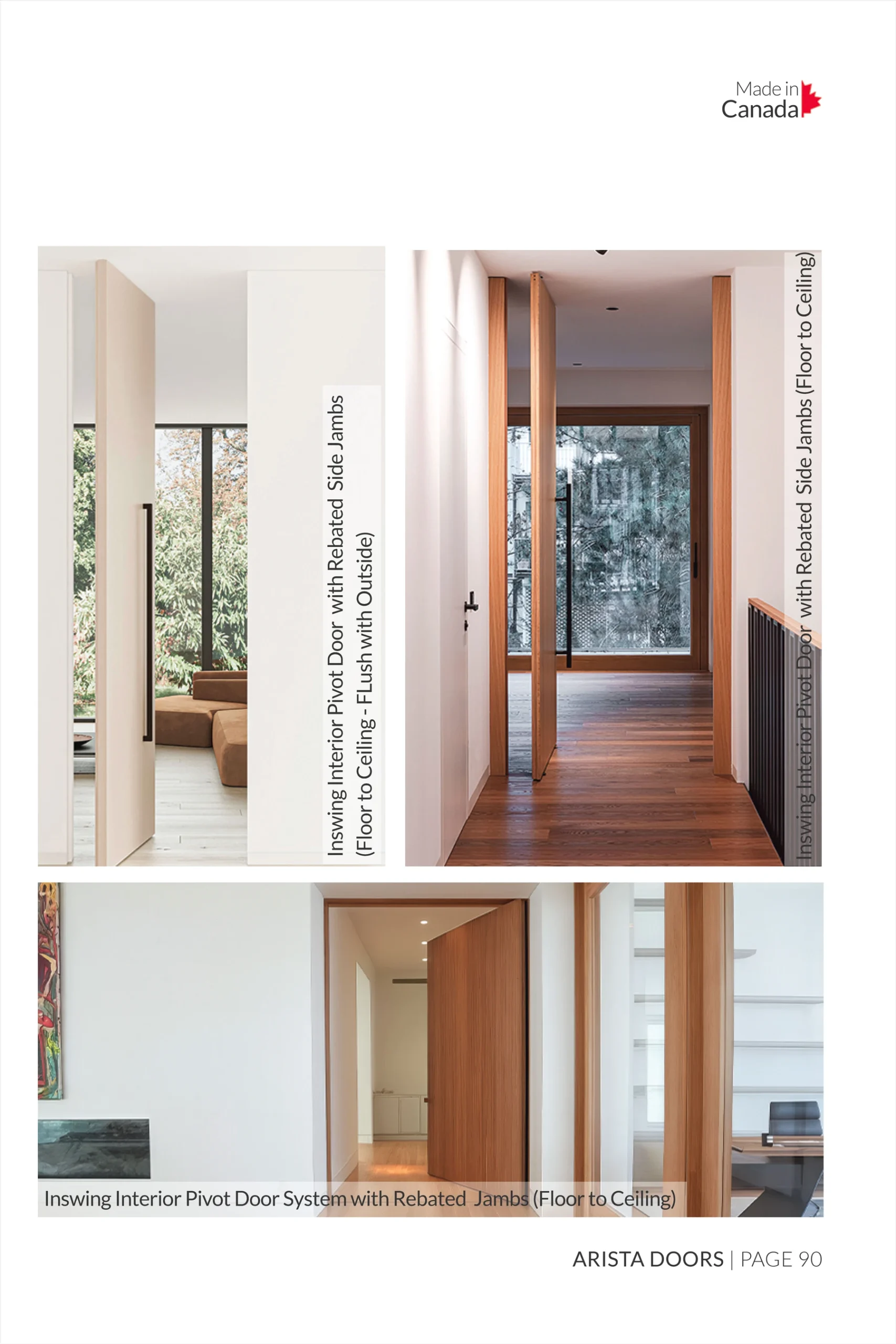
Interior pivot door installation, standard locking hardware
Pivot Door Design Ideas
Because pivot doors support larger formats than hinged doors, they’re frequently specified for statement entrances, floor-to-ceiling glass configurations, and modern architectural facades. The scale and clean hardware profile give designers room to treat the front door as a genuine design feature rather than a purely functional element.
For real examples of pivot doors used across different architectural styles, see: Pivot Door Ideas for Modern Homes
Pivoting Walls: An Extension of the Same System
The same pivot mechanism that supports oversized doors also enables pivoting wall systems, large rotating panels used to open up interior spaces, divide rooms, or create dramatic transitions between indoor and outdoor living areas. If your project involves a wall-scale opening rather than a single door, the engineering principles are closely related, and the same interior construction and hardware considerations generally apply.
Learn more in our complete guide: A Guide to Pivoting Walls
Ready to Build Your Pivot Door?
Every Arista pivot door is engineered and built to the exact dimensions of your opening. Send us your project details, including whether it’s an interior or exterior application, for a free, no-obligation quote.
Request a Free Quote
Or call us at +1 (905) 597-2120 to speak with our team directly.
Frequently Asked Questions
What is a pivot door?
A pivot door is a door that rotates on a concealed pivot point at the top and bottom of the slab, rather than swinging on side-mounted hinges. This allows pivot doors to be built larger and heavier than standard hinged doors while giving them a distinctive, hardware-free visual appearance.
How big can a pivot door be?
Arista’s most common exterior pivot door width is 48″. Widths up to 60″ are available but require engineering review based on height, design, construction method, and structural requirements. Standard height is up to 120″; taller doors require an engineering review and construction recommendation from our team.
What is the difference between an interior and exterior pivot door?
Exterior pivot doors are typically 2 3/4″ thick and require a multipoint locking system for weather sealing, security, and warranty coverage. Interior pivot doors are typically 1 3/4″ or greater and can use standard locking hardware, since they don’t need to manage weather exposure.
What construction methods does Arista use for pivot doors?
Arista builds pivot doors using Engineered Stile & Rail Construction or Engineered Solid Core Construction, selected based on the door’s design, size, finish, and performance requirements. Larger or heavier configurations may also include internal steel reinforcement for added structural stability.
Do all pivot doors need a multipoint lock?
Multipoint locking is required on exterior pivot doors to provide proper compression, weather sealing, security, and warranty coverage. Interior pivot doors can typically use standard locking hardware, depending on the project.
Are pivot doors more expensive than regular doors?
Yes, pivot doors generally cost more than standard hinged doors due to the specialized pivot hardware, the engineering required to support larger sizes, and the precision needed during installation. The added cost reflects the structural capability and design impact pivot doors deliver.