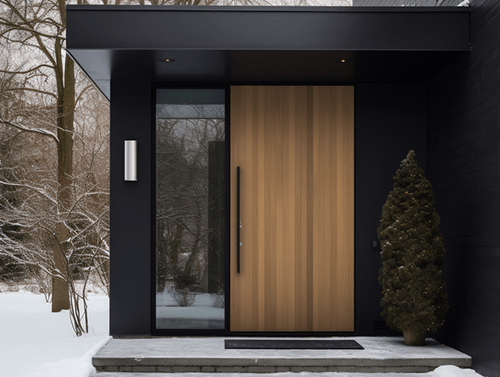
Best Wood for Exterior Doors: Sapele, White Oak, Red Oak and Walnut Compared
For most exterior doors, Sapele Mahogany and White Oak are the two strongest choices. Sapele is stable, takes stain evenly and suits both traditional and modern designs. White Oak’s pores are plugged by natural growths called tyloses, which slows water movement into the wood, and its grain reads beautifully under lighter finishes. Red Oak and Walnut can also work outside, but they need more thought about exposure and finish.
At Arista, Sapele Mahogany is our most requested exterior species and White Oak is second. The right choice for your entrance still depends on how much sun and rain the door will see, the finish colour you want and the style of the house.
In This Article
Quick comparison of exterior door woods
The table below summarizes how the four species Arista uses for exterior doors behave in practice. It is a planning guide, not a durability guarantee: finish quality, maintenance and exposure change the result for every species.
| Species | Look | Exterior behaviour | Best fit |
|---|---|---|---|
| Sapele Mahogany | Reddish-brown with a ribbon figure on quarter-sawn faces | Stable and even-textured; holds stain consistently | Most entrances, stained or painted, traditional or modern |
| White Oak | Light tan to brown; ray fleck on quarter-sawn faces | Tylose-filled pores slow water absorption | Natural and light finishes, modern grain-forward designs |
| Red Oak | Warmer, pinkish tone with pronounced open grain | Open pores absorb moisture more readily | Covered entries with a full protective finish |
| Walnut | Rich chocolate brown | Colour lightens with prolonged sun exposure | Sheltered or shaded entrances, or interior-facing faces |
Sapele Mahogany
Sapele is an African hardwood with a fine, interlocked grain. On quarter-sawn faces that interlocked grain produces a ribbon-like stripe that shifts as you move past the door. The colour starts as a medium reddish-brown and deepens over time.
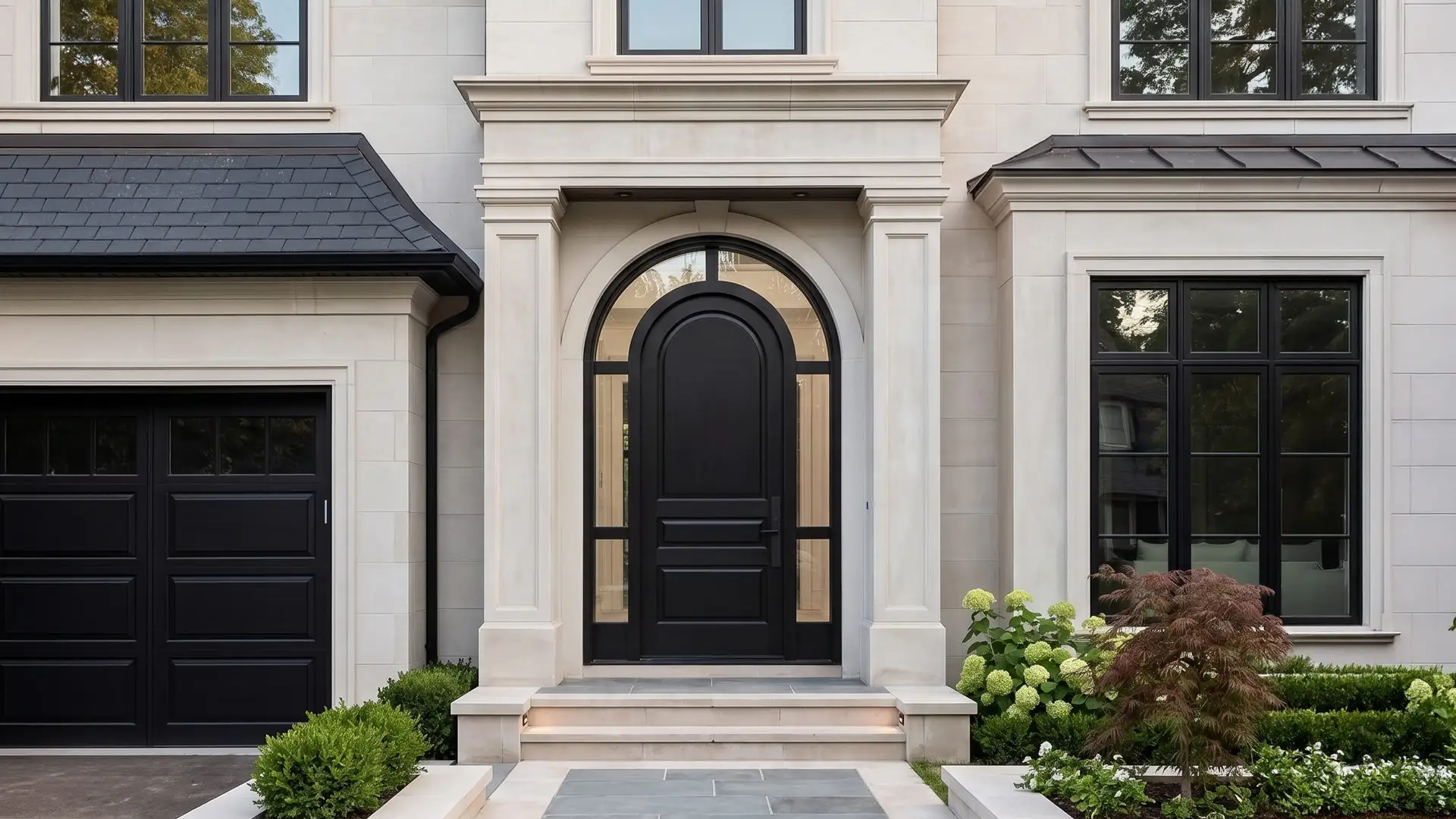
For exterior doors, its main strengths are consistency and stability. With sharp tooling, Sapele holds crisp mouldings, raised panels and grooves, and it absorbs stain evenly. That is why it works under very different finishes, from a natural mahogany tone to the True Black finish on the B2104 entrance shown above.
Sapele is also commonly used for the frame on Arista exterior systems, even when the door face uses another wood. If you are unsure which species to choose, Sapele is the safe starting point for a Canadian entrance.
White Oak

White Oak’s pores are naturally blocked by growths called tyloses, which is what wood specialists mean when they call it a closed-cell species. Water has a harder time travelling into the wood, so White Oak resists moisture better than most hardwoods, including its close relative Red Oak.
The grain changes with the cut. Plain-sawn White Oak shows a cathedral pattern, while quarter-sawn and rift-sawn faces are straighter, and quarter-sawn adds the ray fleck many people associate with oak. Our guide to oak doors explains these cuts in more detail.
One practical point: oak is rich in tannins, which can react with iron and some water-based products to leave dark marks. That is why hardware, fasteners and finishing systems are specified with care on oak doors. White Oak is a natural fit for modern doors such as the B1726, where the grain is the main design feature.
Red Oak
Red Oak is hard, heavy and widely used in North American millwork. It has a warmer, slightly pink tone and a bolder open grain than White Oak.
The trade-off for exterior use is those open pores. Red Oak lacks the tyloses that help seal White Oak, so it takes up moisture more readily. Red Oak can be used on a fully covered entrance, provided every face and edge is sealed. On an exposed elevation with no overhang, White Oak or Sapele is usually the better decision.
Walnut
Walnut is chosen for its depth of colour. Few species look as rich under a clear or lightly tinted finish, and it pairs well with brass, bronze and black hardware.
The caveat is light. Walnut’s dark brown tends to lighten toward a golden tone under prolonged sun, so an unprotected south- or west-facing door will gradually change colour. Walnut works best on a sheltered entrance, under a deep overhang, or as the interior face of a door where the exterior face uses a more weather-tolerant species. A finish with UV protection and a regular maintenance routine also help keep the colour consistent.
Exposure matters as much as species
Two identical doors can age very differently depending on where they are installed. Before choosing a species, look at the opening itself:
- Overhang: a porch roof or recessed entry shields the door from rain and direct sun and is one of the biggest factors in how often the finish needs attention.
- Orientation: south- and west-facing entrances receive the most UV and heat. North-facing doors are the gentlest exposure.
- Finish colour: very dark finishes absorb more heat in direct sun, which increases surface movement. Dark finishes are still possible, but the specification should account for exposure.
- Climate: Canadian winters bring dry indoor air on one face and cold, damp air on the other. Stability matters more than hardness here. Our guide to exterior doors for cold weather covers sealing and construction for these conditions.
For very exposed elevations, it is also worth comparing a wood door against other materials. Our wood vs. fiberglass vs. steel comparison sets out where each one makes sense, and AluWood aluminum-wood doors combine an aluminum-clad exterior with a real hardwood interior face.
Species is the face; construction does the work
The species you choose is what you see and touch, but it is not the whole door. Arista exterior doors use engineered wood construction with real hardwood faces. The engineered core is what keeps a large door flat and stable through seasonal changes. The hardwood face carries the grain, colour and finish.
That construction also means species choice and door size are independent decisions. A tall door in White Oak or Sapele is planned around the opening, the hardware and the locking system rather than limited by the size of a single board. Thickness is specified per project; recent Arista entrances use leaves between 2¼ and 2¾ inches thick.
Finishing is the other half of performance. Whatever species you choose, the finish needs to cover every face and edge, and it needs periodic renewal. Our guide on how to stain a wood door explains the process, and the exterior wood door maintenance and care guide covers ongoing care.
How to choose for your entrance
- Start with exposure. If the door faces south or west with little or no overhang, shortlist Sapele and White Oak first.
- Pick the finish direction. Light, natural finishes show off White Oak. Medium to dark stains and black finishes suit Sapele. Rich natural brown points to Walnut, if the entrance is protected.
- Match the architecture. Raised panels and traditional mouldings look crisp in Sapele. Flat, grooved and plank-style modern doors suit quarter- or rift-sawn White Oak.
- Consider both faces. The interior face can use a different species from the exterior when the exposure calls for it.
- Bring photos of the opening. A photo showing the overhang and the direction the entrance faces lets the design team confirm the species and finish before the specification is drawn.
For the bigger picture of size, glass and hardware decisions, our front door buying guide brings every choice together.
Questions about wood for exterior doors
What is the best wood for a front door in Canada?
Sapele Mahogany and White Oak are the most dependable choices for most Canadian entrances. Sapele offers stability and even staining. White Oak resists moisture well because its pores are plugged by tyloses. Exposure and finish still need to be considered for the specific opening.
Is mahogany or oak better for an exterior door?
It depends on the look and the exposure. Sapele Mahogany is the more versatile option and suits stained, painted and black finishes. White Oak is the better choice for light, natural finishes and modern grain-forward designs. Red Oak is best kept to covered entrances.
Can walnut be used for an exterior door?
Yes, but walnut’s dark colour lightens with prolonged sun exposure. It works best on a sheltered or shaded entrance, with a UV-protective finish and regular maintenance, or as the interior face of a door.
Does a wood front door need an overhang?
It is not mandatory, but an overhang or recessed entry significantly reduces rain and UV exposure. That extends the life of the finish and keeps the door looking consistent for longer, whichever species you choose.
How often does an exterior wood door need refinishing?
There is no single interval. It depends on exposure, finish colour and climate. Inspect the door each spring and fall, and renew the finish when it starts to dull or when water stops beading on the surface. Doors under deep overhangs need attention far less often than fully exposed ones.
Choose the right species for your entrance
Send photos of your opening, the direction it faces and the look you have in mind. The Arista team will recommend a species and finish for your entrance and build the door to your opening’s dimensions.