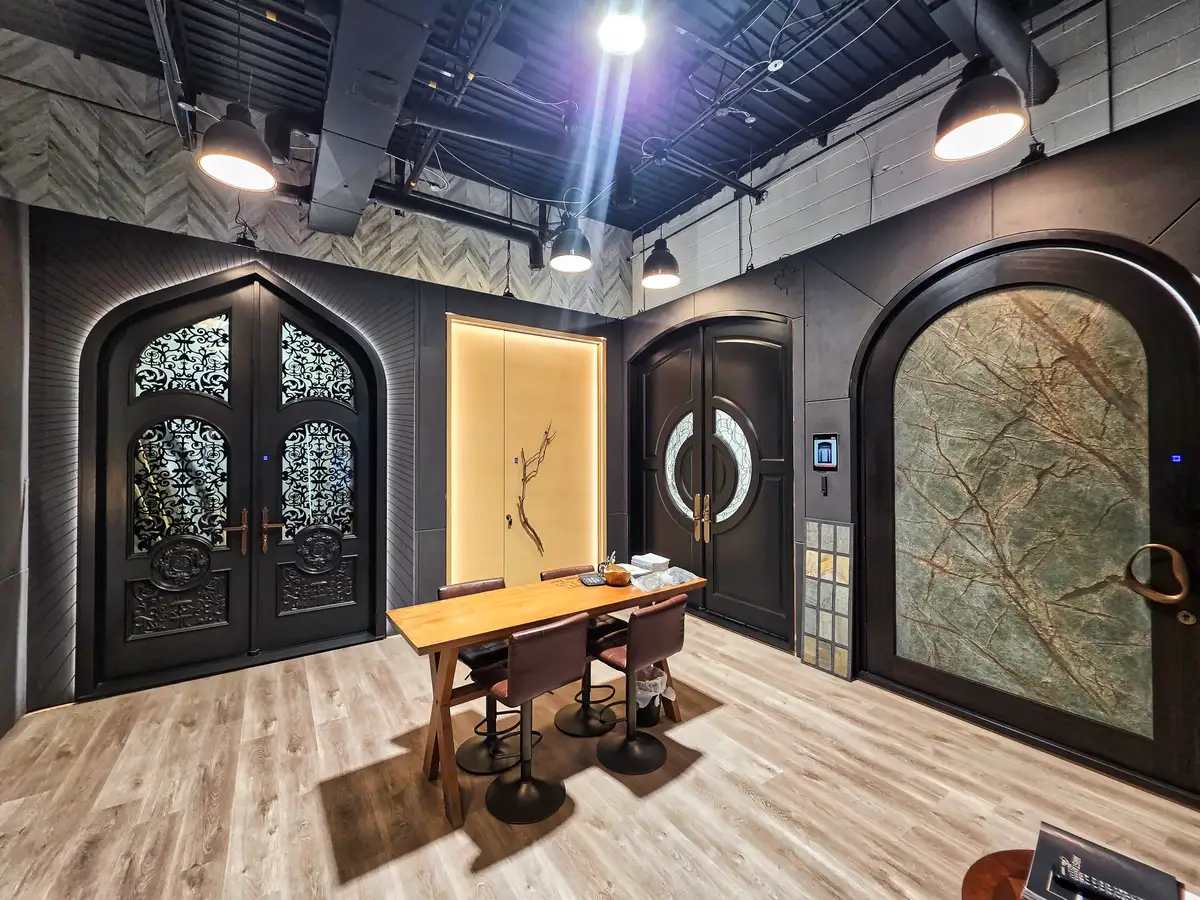
Factors That Affect the Cost of Exterior Wood Doors
Custom exterior wood doors are priced individually because no two projects share the same specification. This guide walks through the main factors that influence cost, from size and wood species to hardware and glass, so you know what to expect before requesting a quote.
In This Article
Size of the Door
Larger doors cost more, since a bigger slab requires more material and more manufacturing time. A double door costs more than a single door, and the door’s thickness, height, and width all factor directly into material cost.
Wood Species
Species selection affects both appearance and price. Sapele Mahogany is our most popular exterior species, valued for its durability, dimensional stability, and long-term exterior performance. White Oak is our second most popular option for its clean, contemporary grain. Red Oak offers a similar design direction to White Oak at a different price point, and Walnut is a luxury option best suited to protected applications, since prolonged sun exposure can cause fading.
Manufacturing Complexity
The more complex the design, the more manufacturing time it requires. Custom molding profiles, panel configurations, inlays, or carved details all add to the labor involved in building the door. Finish work, such as staining or painting, is factored in separately from the base construction.
Sidelights, Transoms, and Glass
Sidelights (glass panels flanking the door) and transoms (glass above the door) add cost but also add natural light and visual impact. Glass panels, textured glass, and decorative glazing on the door slab itself also increase price relative to a solid panel design.
Door Configuration and Style
Configuration affects price in a fairly predictable order: single doors cost less than single doors with one sidelight, which cost less than single doors with two sidelights, followed by double doors and double doors with sidelights. Header shape matters too. Custom, semi-circle, or elliptical headers require more machining and material than a straight header, which adds to cost.
Hardware
Specialty hardware affects the total price of the door. Pivot door hardware and concealed hinges, for example, add a distinct look but also add cost compared to standard hinged hardware.
To see how these factors fit into the wider decision, read our front door buying guide. When your dimensions and preferences are ready, request a project-specific quote from our team.
Get a Project-Specific Quote
Because every Arista door is built to order, we don’t publish a fixed price list. Send us your opening dimensions, wood species preference, and design details, and we’ll prepare a quote based on your exact project.
Request a Free Quote
Or call us at +1 (905) 597-2120 to speak with our team directly.
Frequently Asked Questions
What is the biggest factor in the cost of an exterior wood door?
Size and configuration tend to have the largest impact, since a double door with sidelights requires significantly more material and labor than a single door. Wood species and hardware also meaningfully affect the final price.
Do wood exterior doors warp?
Older solid-lumber doors were prone to warping, but modern engineered wood construction addresses this. Arista doors use an engineered core with a real hardwood face, which resists the twisting and cupping associated with solid lumber construction.
How often does a wood exterior door need maintenance?
This depends on finish and exposure. Varnished doors typically need re-coating every one to two years, polyurethane finishes every other year, and painted doors every five to six years. A covered entryway reduces how often maintenance is needed.