Pivot Doors – Complete Guide
What Is a Pivot Door? How It Works, 4 Types and Key Advantages
A pivot door is one of the most architecturally dramatic entry systems available, rotating on a central vertical axis rather than hanging from side hinges. This guide explains exactly what a pivot door is, how the mechanism works, the four main hinge systems, and why architects and homeowners consistently choose them over traditional doors.
In This Article
What Is a Pivot Door?
A pivot door is a door that rotates on a vertical axis set at the top and bottom of the door, rather than swinging from hinges mounted on the side of the frame. The pivot point can be placed at the center or offset from center, creating the door’s signature sweeping movement.
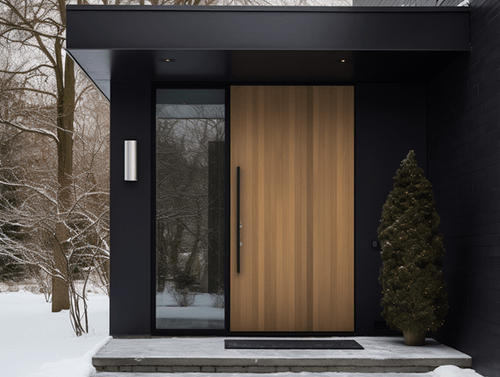
Unlike a standard hinged door, what makes a pivot door distinctive is the absence of visible hardware on the door face. The pivot mechanism is fully concealed inside the door and frame, leaving a clean, uninterrupted surface. This makes pivot doors a natural choice for modern and contemporary exterior doors where architectural clarity matters.
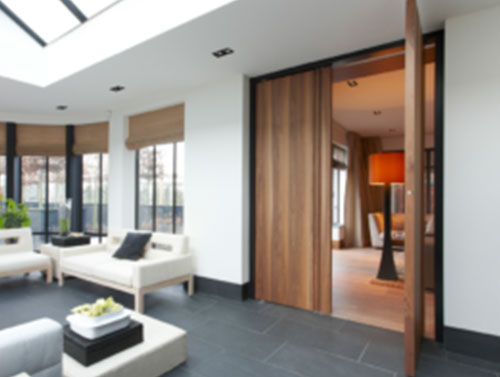
Pivot doors can be used as exterior entry doors, interior room dividers, or interior pivot doors between living spaces. They are also frequently used in commercial applications where oversized openings and high traffic demand a robust, elegant solution.
How Does a Pivot Door Work?

A pivot door operates on two pivot hinges: one mounted at the top of the door into the head frame, and one mounted at the bottom into the floor plate. These two points define a single vertical axis, called a spindle, around which the entire door rotates.
When the pivot point is set a few inches from the edge, the door creates a distinctive tail on the opposite side as it swings open. This dual movement, with the main door swinging outward while the tail swings inward, is the signature visual of a pivot door and what gives the opening such presence.
The pivot mechanism transfers the weight of the door vertically to the floor, rather than laterally to a door frame. This is the key engineering reason why pivot doors can be built far larger and heavier than any hinged door. Some pivot doors weigh up to 500 kg and still open with a single finger.
The pivot mechanism transfers weight to the floor, not the frame, which is why a 500 kg solid wood door can open with the touch of a finger.
4 Types of Pivot Hinge Systems
The hinge system you choose determines how the pivot door behaves, whether it holds open, self-closes, or offers speed and latch control. Here are the four main categories, as developed by leading pivot system manufacturers like FritsJurgens, whose systems are used in Arista’s engineered pivot doors.

Regular Pivot Hinge
A single pivoting point with no hold positions or self-closing features. The simplest system, ideal for single and double-acting pivot doors where manual control is preferred.

Pivot Hinge with Hold Positions
Automatically rotates to fixed hold positions at 0, 90, 180, or 270 degrees. Excellent for pivoting walls and room dividers where the door needs to stay open at defined angles.

Self-Closing Pivot Hinge
Features hydraulic damper control for adjustable soft-close and backcheck. Returns automatically to closed position. The most popular system for exterior pivot doors where weather sealing matters.

Pivot Hinge with Latch Control
Adds latch and speed control on top of the self-closing damper. Ensures the door always closes and latches fully. Ideal for oversized and heavy exterior pivot doors above 200 kg.
How to Install a Pivot Door
Pivot door installation follows four defined steps. Precision in the floor and ceiling plate positioning is critical, as any misalignment affects the door’s swing and seal.
Mount the Floor Plate
Mill the floor seal at the correct location. Using the appropriate drilling template, drill holes for the floor plate, apply adhesive, and set the floor plate in place with a rubber mallet. This plate carries the full weight of the door.
Mount the Ceiling Plate
Use a point laser to transfer the floor plate position directly overhead. Drill the ceiling holes, apply adhesive, and fix the ceiling plate with screws. Accuracy here determines the pivot axis.
Set the Door in Place
Place the door onto the floor plate in the open position. Extend the top pivot and rotate the spindle downward into the receiver at the top of the door. The door is now seated on both pivot points.
Adjust and Test
Adjust the door’s swing speed, soft-close damping, and latch engagement. Test the full range of motion and verify the weather seal compression on all four edges.
Key Advantages of Pivot Doors

Invisible hardwareAll mechanism is concealed inside the door. The face is completely clean.
Any material, any sizePivot systems handle wood, steel, glass, and composite doors up to 500 kg.
Oversized openingsThe floor-to-ceiling axis makes it structurally possible to build doors that side hinges never could support.
Easy installationSuited for new builds and renovation projects with no structural wall modification required.
Interior and exterior useWorks as a front entry, interior room divider, or commercial entrance.
Frameless optionCan be installed without a visible frame, blending seamlessly with the wall.
Smart featuresSoft-close, hold positions, speed control, and latch control are all available depending on the system.
Enhanced securityNo exposed hinges. Pair with a multi-point locking system for maximum protection.
One-finger operationRegardless of weight, a correctly installed pivot door opens with minimal force.
Architectural statementNo other door type commands an entry the way a pivot door does.
Pivot Doors in Modern Architecture

Pivot doors have been a hallmark of serious architectural practice since the Modern Movement. Architects like Le Corbusier and Josep Lluis Sert used them to unite art and function in their most important works, drawn to the way a pivot door commands space without announcing its own mechanism.
Today, all the mechanism is mortised inside the door, making it straightforward to specify oversized and extremely heavy pivot doors for any project, whether residential or commercial, new build or renovation. This gives contemporary architects the freedom to use pivot doors as genuine architectural statements.
At Arista, every custom pivot door is engineered and built to order in our Toronto workshop, combining artisan solid wood construction with fully integrated pivot systems from the world’s leading manufacturers.
Is a Pivot Door Right for Your Home?
A pivot door is the right choice when you want an entry that makes a genuine architectural statement. If your priority is the lowest cost, a standard hinged door will serve you well. But if you are building or renovating with a design vision in mind, a pivot door offers capabilities that no hinged door can match.
Choose a pivot door if
- You want an oversized or floor-to-ceiling entry
- Invisible hardware is important to the design
- You are working with a heavy door material
- The entry is a focal point of the architecture
- You need interior pivoting walls or room dividers
Consider a hinged door if
- Budget is the primary constraint
- The opening is standard width and height
- The floor has obstacles such as rugs or raised thresholds
- The door needs a full perimeter compression seal
Ready to Design Your Custom Pivot Door?
Our team in Toronto builds engineered solid wood pivot doors entirely to order. Any size, any finish, any hinge system. Ships across Canada and the USA.
Request a Free Quote
Or explore our pivot door gallery to see completed projects.
Frequently Asked Questions
What is a pivot door?
A pivot door is a door that rotates on a vertical axis set at the top and bottom of the door, rather than hanging from hinges on the side of the frame. The pivot mechanism is fully concealed inside the door, leaving a clean, hardware-free face.
What is the difference between a pivot door and a hinged door?
A hinged door is supported by two or three hinges on one side of the frame. A pivot door rotates on a central top-and-bottom axis. Pivot doors can be far larger and heavier, have no visible hardware, and create a distinctive sweeping movement when opened.
Are pivot doors secure?
Yes. Pivot doors have no exposed hinges, eliminating the most common forced entry vulnerability. When paired with a multi-point locking system, a pivot door is among the most secure entry options available. Read our full guide on pivot door security.
How heavy can a pivot door be?
With the correct pivot hinge system, a pivot door can weigh up to 500 kg and still operate with minimal effort. The mechanism transfers weight directly to the floor, not the door frame, which is what makes this possible.
How much does a custom pivot door cost in Canada?
A custom solid wood pivot door from Arista Doors typically starts from CA$5,000 to $8,000 depending on wood species, size, glass options, and hinge system. Request a free quote for a project-specific estimate.
Can pivot doors be used as interior doors?
Yes. Pivot doors work well as interior room dividers, between living and dining spaces, or as statement bedroom entries. Read our interior pivot door guide for more.