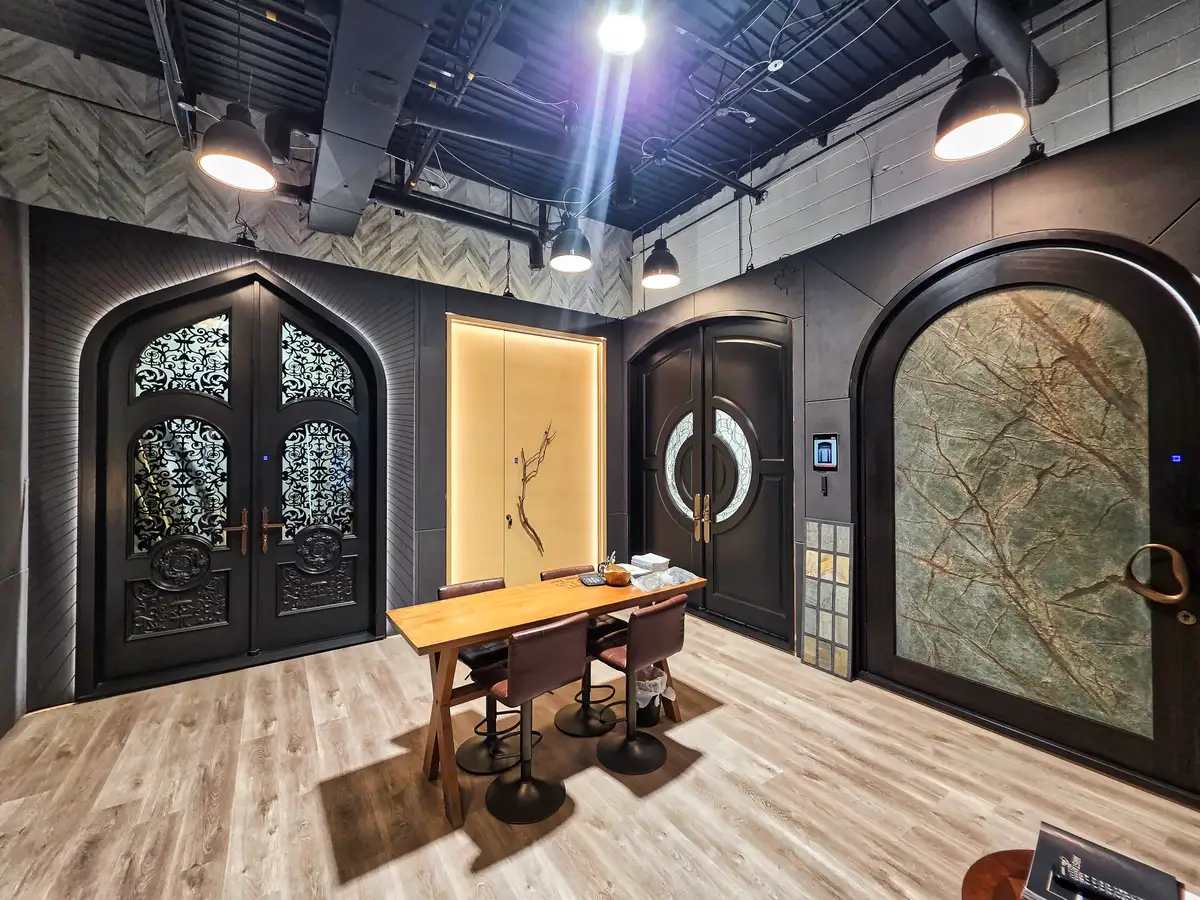
A Guide to Interior Pivot Doors
Interior pivot doors bring a distinct, architecturally striking movement to a home that standard hinged doors can’t replicate. This guide covers what a pivot door is, the different interior applications, hardware, and the practical advantages of choosing one.
In This Article
What Is a Pivot Door?
A pivot door rotates on a vertical axis rather than swinging from side-mounted hinges. The pivot points sit at the top and bottom of the door rather than along one edge, which creates a distinctive visual movement: the door appears to rotate from within itself rather than swing open from a visible hinge line. For a full technical breakdown, see our guide on how a pivot door works.
Types of Interior Pivot Applications
Interior Pivot Doors
A pivot door can close off or open up a space while functioning as a genuine design element in its own right. Arista builds interior pivot doors using Engineered Stile & Rail Construction or Engineered Solid Core Construction, in wood species including Sapele Mahogany, White Oak, Red Oak, Walnut, and Poplar for paint-grade applications. To plan the opening and usable passage, see our pivot door size guide, and browse more interior door styles for design direction.
Pivot Closet Doors
A pivot mechanism can also maximize access to closets and storage spaces. Positioning the spindle closer to the center of the door reduces how much clearance is needed inside the closet for the door to swing open, which helps make the most of tight storage footprints.
Pivoting Walls
The same mechanism that supports pivot doors also enables full pivoting wall systems, large rotating panels that can divide or open up a space with minimal visible hardware. Learn more in our complete guide to pivoting walls.
Interior Pivot Door Hardware
Interior pivot hardware typically consists of a pivot hinge system mortised into the bottom of the door and a top pivot mortised into the top. Unlike ancient pivot doors that rotated on an extended vertical axis, modern systems use precision hinge hardware, including self-closing options that can hold the door at set positions such as 0°, 90°, or -90°. Because the hardware is selected around the panel’s weight, it helps to understand the difference between solid core and hollow core doors before settling on a design.
Advantages of Interior Pivot Doors
- Pivot construction allows for taller and wider door formats than traditional hinged doors support (see swing doors vs. pivot doors for a full comparison).
- Pivot hardware can be used with nearly any interior door design, as long as the hinges can be mortised into the slab.
- Concealed hinges keep the visual focus entirely on the door’s design.
- Interior pivot doors can be built frameless, and multiple flush panels can be arranged side by side or configured as a pivoting wall.
- A wide range of materials and finishes can be used in pivot door construction.
Get a Quote for a Custom Interior Pivot Door
Every Arista pivot door is engineered and built to order for your exact opening and design intent.
Request a Free Quote
Or call us at +1 (905) 597-2120 to speak with our team directly.
Frequently Asked Questions
What wood species can be used for an interior pivot door?
Arista builds interior pivot doors in Sapele Mahogany, White Oak, Red Oak, Walnut, or Poplar for paint-grade applications, selected based on your design and finish preferences.
Do interior pivot doors need special hardware?
Yes. Interior pivot doors use a dedicated pivot hinge system mortised into the top and bottom of the door, distinct from standard hinged door hardware. Standard locking hardware is generally sufficient for interior applications.
Can a pivot door be used as a closet or hidden room divider?
Yes. Pivot closet doors and pivoting bookcase-style dividers are both common interior applications, offering maximum access or a concealed, seamless design element.